 J1coding
f23ddabf1e
J1coding
f23ddabf1e
librashader built for arm64 and pinned, wired into GSDeviceMTL, and a preset
library behind it that can name a file the same way twice across a
reinstall.

The chain runs from DoApplyShaderChain, after ShadeBoost and before present,
on the same ping-pong the FXAA path uses. Two things about it are load-
bearing rather than incidental. EndRenderPass comes first, because the chain
opens its own passes and Metal aborts if ours is still encoding. And
FlushEncoders comes last, because librashader recycles its per-frame objects
over a ring shallower than our deferred-submit window, so a chain frame has
to end the batch. A failure latches on the preset that caused it, or a
preset that will not compile recompiles every frame forever.

Static archive rather than dylib, decided by building both against a working
tracer and measuring, and the loser was deleted rather than left as an option.

The library underneath is where the reinstall problem lives. Both preset
roots sit under a container UUID that changes on every sideload, so a
selection stored as an absolute path is stale within days. A preset is
stored as a marker plus a root-relative path -- bundle: or data: -- and re-
rooted at launch. The separator is a colon because Files refuses one in a
name and it is not a path separator, so the relative half never needs
escaping.

Packs come in as a picked zip or folder through an extractor that keeps the
directory tree, because a .slangp names its stages by relative path and the
tree is part of the pack rather than an arrangement of it. That is the
opposite of the skin extractor's flattening policy, so a test fences the two
apart. Sixteen presets ship in the app, each cleared against its own header
rather than a blanket grant.

librashader's own cache goes to Library/Caches through XDG_CACHE_HOME, set
before anything loads it. Latent today because the Metal runtime never
reaches that cache, but a pin bump that adds caching would otherwise put a
disposable file somewhere iOS can neither purge nor keep out of a backup.
ARMSX2 — Native ARM64 JIT Fork of PCSX2

ARMSX2 is a free and open-source PlayStation 2 (PS2) emulator based on PCSX2. Its purpose is to emulate the PS2's hardware, using a combination of MIPS CPU Interpreters, Recompilers and a Virtual Machine which manages hardware states and PS2 system memory. This allows you to play PS2 games on your phone, PC, or gaming handheld, with many additional features and benefits.
Thank You
The ARMSX2 team is eternally indebted to the PCSX2 project it is based on. We are so fortunate to build on their 20 years of hardcore development.
About This Fork
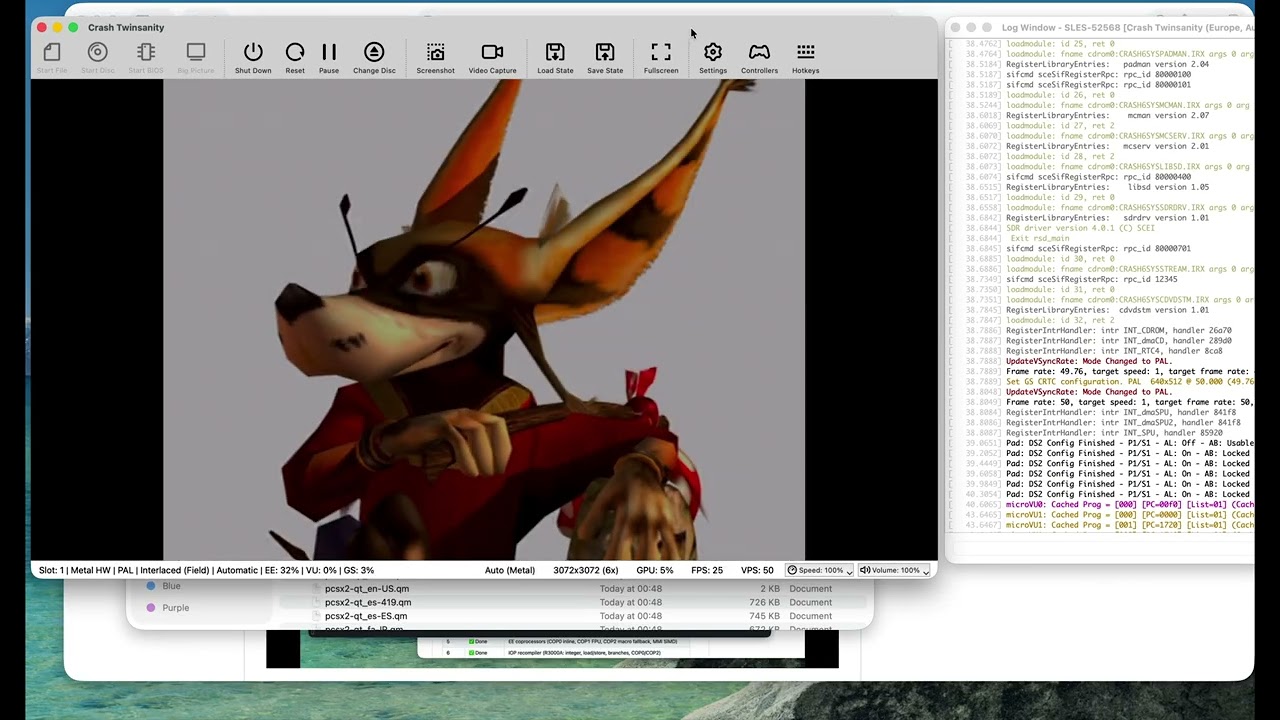
The upstream PCSX2 project ships an ARM64 interpreter build for ARM, but its high-performance JIT recompilers (EE, IOP, VU0, VU1, and vtlb fast memory) are x86-64 only.
This fork exists to close that gap. The goal is to preserve the correctness features of 20 years of PCSX2 development, while generating the fastest native ARM performance possible.
Current status:
- ✅ EE (Emotion Engine) recompiler — integer, float, MMI, COP0/COP1/COP2, branches, load/store
- ✅ IOP (I/O Processor / R3000A) recompiler — full integer, load/store, branches, coprocessors
- ✅ VU (Vector Unit) recompiler — microVU skeleton + Upper FMAC vector ISA complete; Lower ISA and runtime complete
- ✅ vtlb fast memory
- ✅ Native ARM64 binary builds and boots the PS2 BIOS
- ✅ 2D games are already playable
- ✅ 3D games run
Why LLMs / AI Were Used
A word on methodology:
The x86-64 JIT code in upstream ARMSX2 is already proven correct — it has run thousands of PS2 titles for years. The challenge in this port is not emulator design or JIT theory; it is mechanical translation of a large, well-understood x86-64 assembly codebase into equivalent ARM64 assembly (via VIXL) while preserving the exact same register-allocation contracts, block lifecycle, and recompiler semantics.
Large language models (LLMs) were used as an accelerant for this translation work — pattern-matching x86 JIT boilerplate to ARM64 equivalents, scaffolding emit routines, and keeping the porting velocity high. The JIT logic (block compiler, dispatcher, analysis passes, flag pipelines, clamping rules, Tri-Ace hacks, etc.) is taken directly from the upstream x86 implementation and validated against it. Nothing was hallucinated from scratch.
In other words: the hard engineering was done by the PCSX2 team over two decades. The hard typing — translating ~50k lines of x86 emitter code into ARM64 — is what AI helped compress.
System Requirements
ARMSX2 targets ARM64 across desktop (macOS, Windows, Linux) and mobile (Android, iOS/iPadOS), all from the single shared core. Our setup documentation page contains additional details on software and hardware requirements.
Please note that a BIOS dump from a legitimately-owned PS2 console is required to use the emulator. For more information, visit this page.
Building
Check out our github actions for the latest build recipe