 jpolo1224
cafb5e758b
jpolo1224
cafb5e758b
The legacy APK claimed Android 8 (minSdk 26) while being compiled
-march=armv8.1-a, which lets clang emit LSE atomics inline. Android 8 means
Cortex-A53/A72/A73 — ARMv8.0, no LSE — so the one tier whose entire purpose is
reach did not reach them.

This is not a theoretical concern. BuildParameters.cmake:145 already records it:
'proven by a casal SIGILL on a real A53 device'. The guard written in response
only applies the safe default when nobody passes an -march, and this script
always passes one, so the tier defeated the protection added for it.

Legacy now builds -march=armv8-a -moutline-atomics, which is exactly what that
comment prescribes. Outline atomics keep LSE on cores that have it via a
runtime HWCAP dispatch, so a modern phone loses nothing.

Verified on the built core rather than assumed. The flags reach 3990 and 2036
compile lines respectively, and disassembling an LSE site shows the dispatch:

    bti  c
    adrp x16, ...                 ; __aarch64_have_lse_atomics
    ldrb w16, [x16, #0xc10]
    cbz  w16, 0x10b7128           ; no LSE -> fall through to LL/SC
    cas  w0, w1, [x2]
  0x10b7128:
    ldxr w0, [x2] / cmp / stxr / cbnz

An A53 takes the branch and never reaches the cas. APK minSdk confirmed 26.

Also moves a11/a13/a15 onto ARMSX3's SDK/NDK pairs and pins all four to NDK 29.
The NDK is not a device-compatibility knob — API level and -march gate devices,
and nothing on the device can tell which toolchain built the binary — so one
toolchain across the matrix is what makes a cross-tier comparison mean anything,
and there is no reason to withhold the measured gain from the weakest tier.

Needs a new armsx2.marchExtra gradle property: -moutline-atomics has to be its
own token, and BuildParameters.cmake's escape hatch keys on CMAKE_CXX_FLAGS
matching '-march='.

Artifact renamed to ARMSX2-<VN>-legacy-armv8.0-sdk26.apk. The updater keys on
the -sdkNN suffix, which is unchanged, so no updater change is needed. The Play
AAB is untouched: build.gradle.kts defaults still say minSdk 26 / NDK 28, and
only the APK script ever passes the tier properties.
ARMSX2 — Native ARM64 JIT Fork of PCSX2

ARMSX2 is a free and open-source PlayStation 2 (PS2) emulator based on PCSX2. Its purpose is to emulate the PS2's hardware, using a combination of MIPS CPU Interpreters, Recompilers and a Virtual Machine which manages hardware states and PS2 system memory. This allows you to play PS2 games on your phone, PC, or gaming handheld, with many additional features and benefits.
Thank You
The ARMSX2 team is eternally indebted to the PCSX2 project it is based on. We are so fortunate to build on their 20 years of hardcore development.
About This Fork
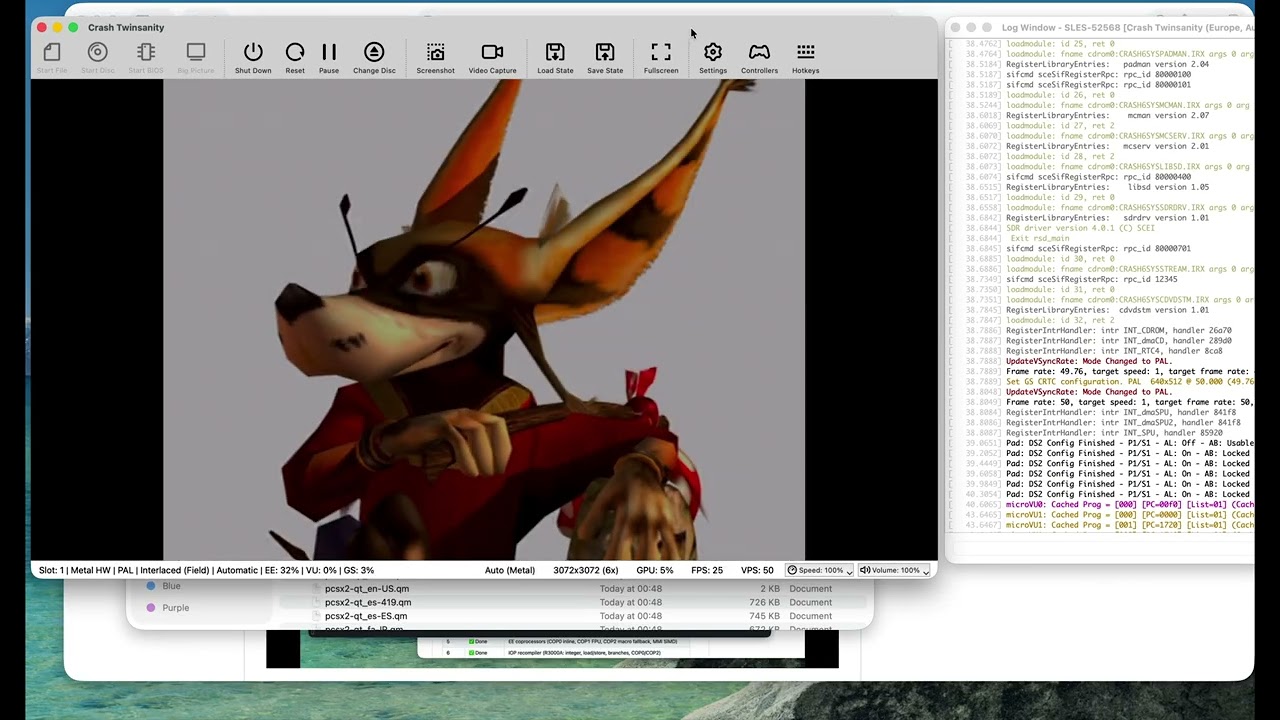
The upstream PCSX2 project ships an ARM64 interpreter build for ARM, but its high-performance JIT recompilers (EE, IOP, VU0, VU1, and vtlb fast memory) are x86-64 only.
This fork exists to close that gap. The goal is to preserve the correctness features of 20 years of PCSX2 development, while generating the fastest native ARM performance possible.
Current status:
- ✅ EE (Emotion Engine) recompiler — integer, float, MMI, COP0/COP1/COP2, branches, load/store
- ✅ IOP (I/O Processor / R3000A) recompiler — full integer, load/store, branches, coprocessors
- ✅ VU (Vector Unit) recompiler — microVU skeleton + Upper FMAC vector ISA complete; Lower ISA and runtime complete
- ✅ vtlb fast memory
- ✅ Native ARM64 binary builds and boots the PS2 BIOS
- ✅ 2D games are already playable
- ✅ 3D games run
Why LLMs / AI Were Used
A word on methodology:
The x86-64 JIT code in upstream ARMSX2 is already proven correct — it has run thousands of PS2 titles for years. The challenge in this port is not emulator design or JIT theory; it is mechanical translation of a large, well-understood x86-64 assembly codebase into equivalent ARM64 assembly (via VIXL) while preserving the exact same register-allocation contracts, block lifecycle, and recompiler semantics.
Large language models (LLMs) were used as an accelerant for this translation work — pattern-matching x86 JIT boilerplate to ARM64 equivalents, scaffolding emit routines, and keeping the porting velocity high. The JIT logic (block compiler, dispatcher, analysis passes, flag pipelines, clamping rules, Tri-Ace hacks, etc.) is taken directly from the upstream x86 implementation and validated against it. Nothing was hallucinated from scratch.
In other words: the hard engineering was done by the PCSX2 team over two decades. The hard typing — translating ~50k lines of x86 emitter code into ARM64 — is what AI helped compress.
System Requirements
ARMSX2 targets ARM64 across desktop (macOS, Windows, Linux) and mobile (Android, iOS/iPadOS), all from the single shared core. Our setup documentation page contains additional details on software and hardware requirements.
Please note that a BIOS dump from a legitimately-owned PS2 console is required to use the emulator. For more information, visit this page.
Building
Check out our github actions for the latest build recipe