 J1coding
be72a8e1eb
J1coding
be72a8e1eb
It shipped as its own Section on the settings page, which put it below the
parameter list. With crt-aperture selected that is twenty-two sliders and
about thirty-nine swipes, on the one control a tester had asked for by name.
Found by walking the screen in the simulator rather than by reading it,
which is the only way this kind of thing turns up.

It moves into ShaderChainSection, directly under Preset and above Install
Shader Pack, so the three ways to get a preset sit together in the order you
would try them: pick one you have, download one, install one from a file.

That also puts it in the in-game pause panel, which is a gain rather than a
side effect, and it works only because GameScreenView wraps the shared
section in its own NavigationStack. Without that every NavigationLink in the
section is dead on tap, Preset included, so the fence now checks for the
stack in the text immediately around the mount.

Immediately around, and not anywhere earlier in the file, because the first
version of that check searched backwards from the mount through the whole of
GameScreenView and any one of its several other NavigationStacks satisfied
it. Deleting the one that matters left the suite green. That is the third
time in this branch an assertion has been satisfied by a neighbour, and the
only reason any of the three were caught is that each new check was run
against a deliberately broken source before being trusted.

The row sits outside the enabled gate, which the first attempt at this move
got wrong. Every other row in that section is behind `if enabled`, and
putting the download row there too hid it whenever the chain was off -- so a
first run had nothing to select, no way to fetch anything, and no hint that
the toggle came first. Caught by relaunching with the chain off and looking,
one screenshot after the change built.
ARMSX2 — Native ARM64 JIT Fork of PCSX2

ARMSX2 is a free and open-source PlayStation 2 (PS2) emulator based on PCSX2. Its purpose is to emulate the PS2's hardware, using a combination of MIPS CPU Interpreters, Recompilers and a Virtual Machine which manages hardware states and PS2 system memory. This allows you to play PS2 games on your phone, PC, or gaming handheld, with many additional features and benefits.
Thank You
The ARMSX2 team is eternally indebted to the PCSX2 project it is based on. We are so fortunate to build on their 20 years of hardcore development.
About This Fork
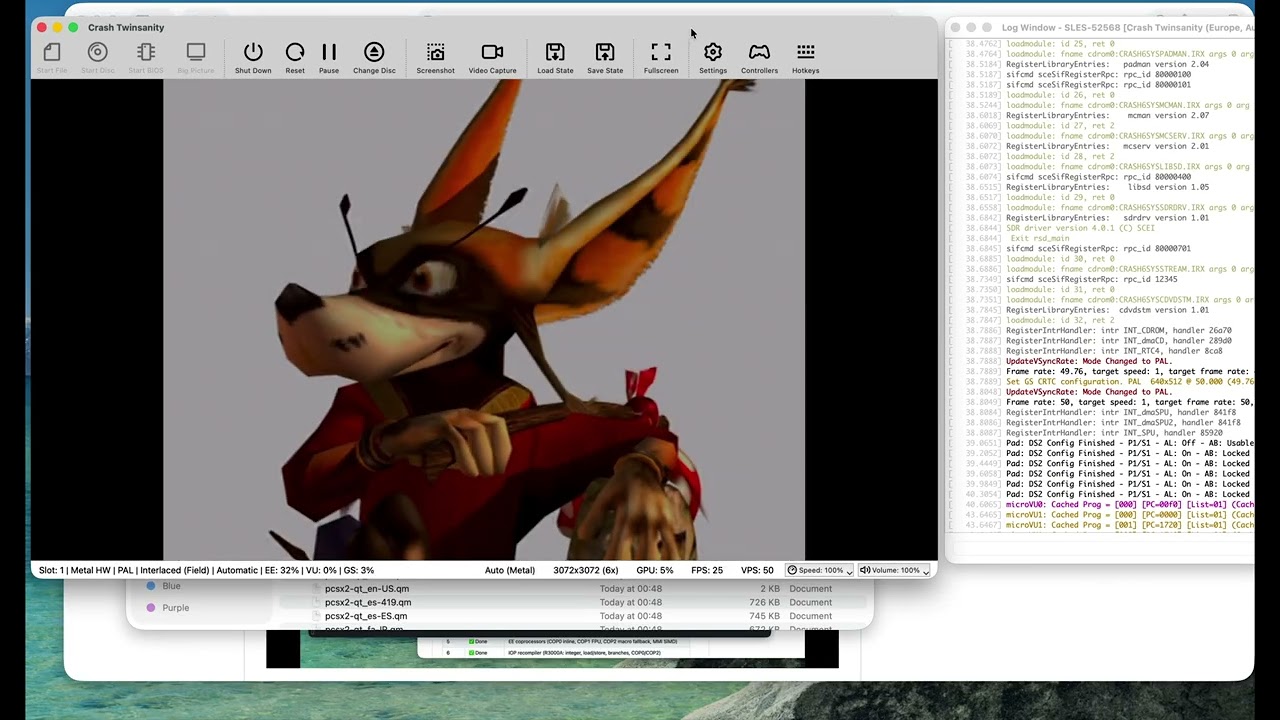
The upstream PCSX2 project ships an ARM64 interpreter build for ARM, but its high-performance JIT recompilers (EE, IOP, VU0, VU1, and vtlb fast memory) are x86-64 only.
This fork exists to close that gap. The goal is to preserve the correctness features of 20 years of PCSX2 development, while generating the fastest native ARM performance possible.
Current status:
- ✅ EE (Emotion Engine) recompiler — integer, float, MMI, COP0/COP1/COP2, branches, load/store
- ✅ IOP (I/O Processor / R3000A) recompiler — full integer, load/store, branches, coprocessors
- ✅ VU (Vector Unit) recompiler — microVU skeleton + Upper FMAC vector ISA complete; Lower ISA and runtime complete
- ✅ vtlb fast memory
- ✅ Native ARM64 binary builds and boots the PS2 BIOS
- ✅ 2D games are already playable
- ✅ 3D games run
Why LLMs / AI Were Used
A word on methodology:
The x86-64 JIT code in upstream ARMSX2 is already proven correct — it has run thousands of PS2 titles for years. The challenge in this port is not emulator design or JIT theory; it is mechanical translation of a large, well-understood x86-64 assembly codebase into equivalent ARM64 assembly (via VIXL) while preserving the exact same register-allocation contracts, block lifecycle, and recompiler semantics.
Large language models (LLMs) were used as an accelerant for this translation work — pattern-matching x86 JIT boilerplate to ARM64 equivalents, scaffolding emit routines, and keeping the porting velocity high. The JIT logic (block compiler, dispatcher, analysis passes, flag pipelines, clamping rules, Tri-Ace hacks, etc.) is taken directly from the upstream x86 implementation and validated against it. Nothing was hallucinated from scratch.
In other words: the hard engineering was done by the PCSX2 team over two decades. The hard typing — translating ~50k lines of x86 emitter code into ARM64 — is what AI helped compress.
System Requirements
ARMSX2 targets ARM64 across desktop (macOS, Windows, Linux) and mobile (Android, iOS/iPadOS), all from the single shared core. Our setup documentation page contains additional details on software and hardware requirements.
Please note that a BIOS dump from a legitimately-owned PS2 console is required to use the emulator. For more information, visit this page.
Building
Check out our github actions for the latest build recipe