 jpolo1224
3768d442c7
jpolo1224
3768d442c7
Gesture control (PPSSPP-style): swipes and a double-tap on empty screen area fire a
PS2 button. The double-tap takes a Tap/Hold mode — Tap pulses (NFS nitro), Hold
latches until you double-tap again (ARPG camera lock). The layer composes below every
widget, rejects a DOWN a control already consumed, and never consumes anything itself,
so it cannot swallow a press. Pulses hold 40ms because the emulated pad drops an
instant down+up.

Clock + battery readout in the library toolbar and the in-game menu header. The glyph
drains with charge (green/amber/red) and shows a bolt while charging. Time-remaining
appears only while charging: Android has computeChargeTimeRemaining() but no public
discharge-time API, and inventing an estimate would be worse than omitting it.

Texture packs:
- write() did delete()+renameTo(); if the rename failed the whole install record was
  gone, and runCatching swallowed it while still bumping revision. Now an atomic
  Files.move with a .bak fallback. This is "packs forget being installed after ~57
  downloads", and very likely also "delete does nothing" / "still says Installed".
- reconcile() refuses to wipe records when a scan reports zero packs but records
  exist — that is a failed listFiles(), not sixty simultaneous deletions.
- refresh() walked every file of every pack on every open (~250k stats at 60 packs).
  Sizes now come from an mtime-keyed cache.
- The catalogue paged 20 rows at a time with a "Show N more" that names the
  remainder; it cannot be a LazyColumn inside the existing verticalScroll.
- Installed packs show game names, and the catalogue sorts by game or serial.

Controls reset now exists: resetTunables() hand-listed keys, drifted behind every
setting added after it, and had ZERO call sites. Replaced with resetAllControls(),
which sweeps by key prefix so it cannot rot, scoped global or per-game.

Confirmations are inline overlays claiming an exclusive nav layer, not Compose
dialogs — a dialog is its own window and swallows controller keys, so those prompts
were touch-only. Adds Clear All for Recently Played and a full app reset; the reset
also purges the in-folder settings mirror and gamesettings INIs, without which the
next launch would silently restore everything it just wiped.

Motion control falls back to the accelerometer where there is no gyroscope, with the
tilt limitation stated in the UI (gravity cannot observe yaw). Adds a Motion Recenter
hotkey — recenter() previously had no call site at all.
ARMSX2 — Native ARM64 JIT Fork of PCSX2

ARMSX2 is a free and open-source PlayStation 2 (PS2) emulator based on PCSX2. Its purpose is to emulate the PS2's hardware, using a combination of MIPS CPU Interpreters, Recompilers and a Virtual Machine which manages hardware states and PS2 system memory. This allows you to play PS2 games on your phone, PC, or gaming handheld, with many additional features and benefits.
Thank You
The ARMSX2 team is eternally indebted to the PCSX2 project it is based on. We are so fortunate to build on their 20 years of hardcore development.
About This Fork
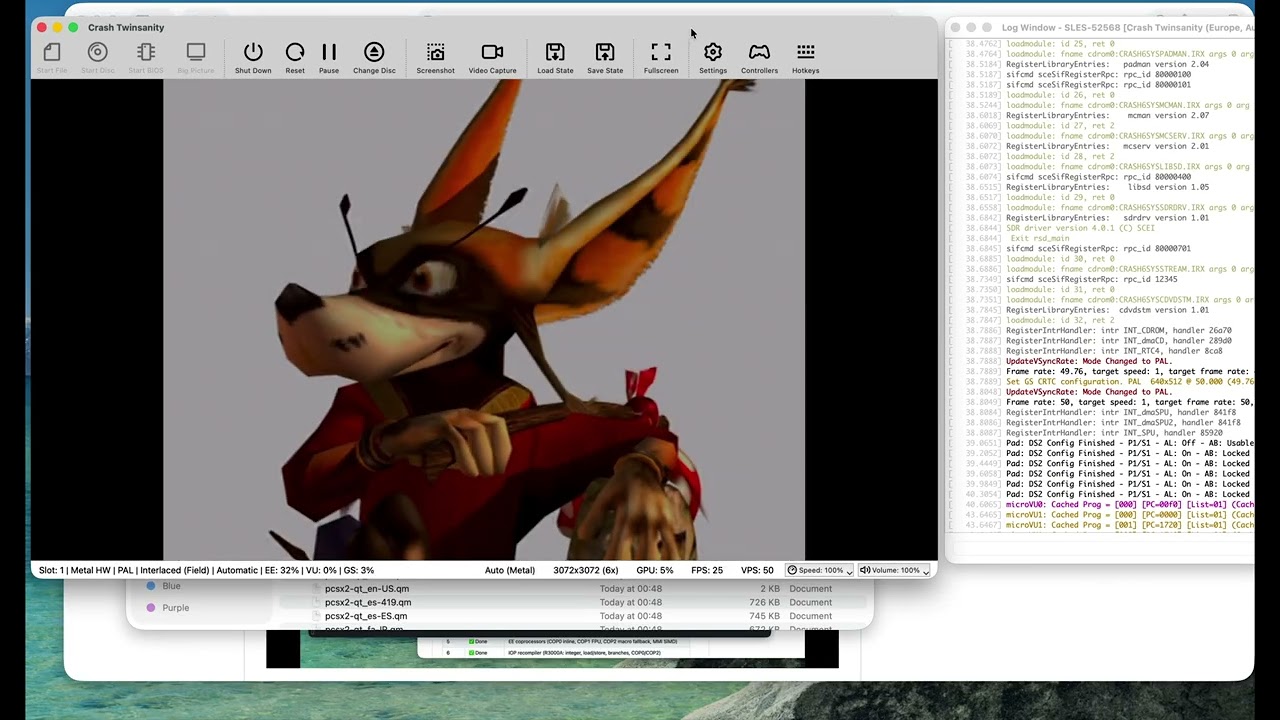
The upstream PCSX2 project ships an ARM64 interpreter build for ARM, but its high-performance JIT recompilers (EE, IOP, VU0, VU1, and vtlb fast memory) are x86-64 only.
This fork exists to close that gap. The goal is to preserve the correctness features of 20 years of PCSX2 development, while generating the fastest native ARM performance possible.
Current status:
- ✅ EE (Emotion Engine) recompiler — integer, float, MMI, COP0/COP1/COP2, branches, load/store
- ✅ IOP (I/O Processor / R3000A) recompiler — full integer, load/store, branches, coprocessors
- ✅ VU (Vector Unit) recompiler — microVU skeleton + Upper FMAC vector ISA complete; Lower ISA and runtime complete
- ✅ vtlb fast memory
- ✅ Native ARM64 binary builds and boots the PS2 BIOS
- ✅ 2D games are already playable
- ✅ 3D games run
Why LLMs / AI Were Used
A word on methodology:
The x86-64 JIT code in upstream ARMSX2 is already proven correct — it has run thousands of PS2 titles for years. The challenge in this port is not emulator design or JIT theory; it is mechanical translation of a large, well-understood x86-64 assembly codebase into equivalent ARM64 assembly (via VIXL) while preserving the exact same register-allocation contracts, block lifecycle, and recompiler semantics.
Large language models (LLMs) were used as an accelerant for this translation work — pattern-matching x86 JIT boilerplate to ARM64 equivalents, scaffolding emit routines, and keeping the porting velocity high. The JIT logic (block compiler, dispatcher, analysis passes, flag pipelines, clamping rules, Tri-Ace hacks, etc.) is taken directly from the upstream x86 implementation and validated against it. Nothing was hallucinated from scratch.
In other words: the hard engineering was done by the PCSX2 team over two decades. The hard typing — translating ~50k lines of x86 emitter code into ARM64 — is what AI helped compress.
System Requirements
ARMSX2 targets ARM64 across desktop (macOS, Windows, Linux) and mobile (Android, iOS/iPadOS), all from the single shared core. Our setup documentation page contains additional details on software and hardware requirements.
Please note that a BIOS dump from a legitimately-owned PS2 console is required to use the emulator. For more information, visit this page.
Building
Check out our github actions for the latest build recipe