 jpolo1224
001ca40803
jpolo1224
001ca40803
A third display upscaler beside FSR1, and the first one written for the
hardware this app actually runs on: FSR1's two compute passes are the
expensive outlier on mobile, while SGSR is a single pass Qualcomm designed
for Adreno.

The filter is Qualcomm's, BSD-3-Clause, unchanged in substance. What differs
is the shape around it -- theirs is a fragment shader over a fullscreen
triangle, this is a compute pass, because that is what GSDevice already knows
how to schedule. So the interpolated texcoord becomes a UV computed from the
invocation id and the fragment output becomes an imageStore. The crop
handling and the widened 0..2 sharpness range come from the Eden Emulator
Project's port (GPL-3.0-or-later, compatible with PCSX2's GPL-3.0+); PCSX2
hands the pass a display rectangle inside a larger target, which is the same
problem FsrEasuConOffset solves for FSR1.

Deliberately a strict subset of what FSR1 already requires -- same descriptor
types, same rgba8 storage image, textureGather with a constant component and
no offset, which is core Vulkan 1.0 and needs no optional feature. So any
driver already running FSR1 can run this, Turnip included, and there is no
vendor gate on either. A driver that cannot compile the pipeline clears
Features().sgsr and the renderer falls back to plain bilinear with an OSD
notice, rather than failing.

The Android upscaler control becomes a picker rather than an on/off toggle:
three mutually exclusive upscalers expressed as two toggles that silently
switch each other off is a worse way to say it than one list. FSR1 and SGSR
share the existing sharpness slider -- the number means different things to
each, but it is the same intent, and a second slider would only invite the
two to disagree.

★ The Settings.kt clamp on the persisted enum was still bounded at
UPSCALER_FSR1, and would have silently rewritten any SGSR selection back to
Off. That clamp's own comment warns about exactly this failure; it still had
to be updated by hand. Worth remembering the next time the enum grows.

Suggested by CamilleLaVey, who authored the upstream changes (eden-emu #4293).
ARMSX2 — Native ARM64 JIT Fork of PCSX2

ARMSX2 is a free and open-source PlayStation 2 (PS2) emulator based on PCSX2. Its purpose is to emulate the PS2's hardware, using a combination of MIPS CPU Interpreters, Recompilers and a Virtual Machine which manages hardware states and PS2 system memory. This allows you to play PS2 games on your phone, PC, or gaming handheld, with many additional features and benefits.
Thank You
The ARMSX2 team is eternally indebted to the PCSX2 project it is based on. We are so fortunate to build on their 20 years of hardcore development.
About This Fork
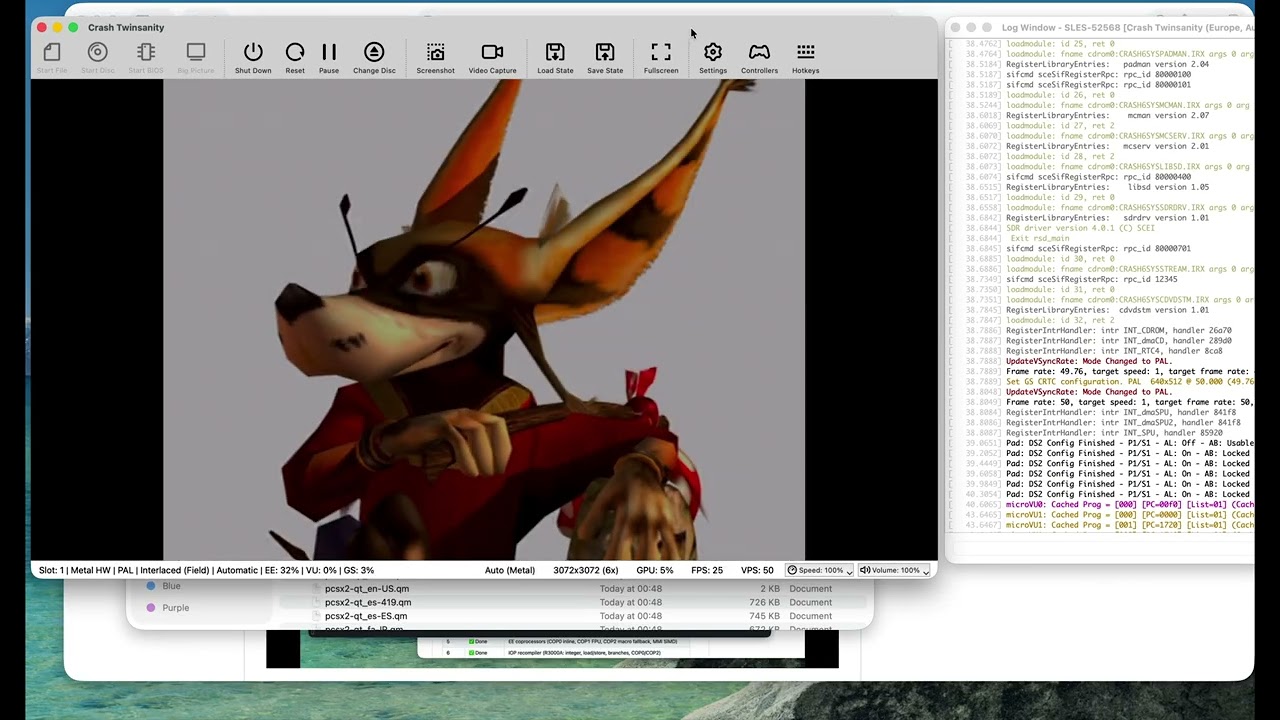
The upstream PCSX2 project ships an ARM64 interpreter build for ARM, but its high-performance JIT recompilers (EE, IOP, VU0, VU1, and vtlb fast memory) are x86-64 only.
This fork exists to close that gap. The goal is to preserve the correctness features of 20 years of PCSX2 development, while generating the fastest native ARM performance possible.
Current status:
- ✅ EE (Emotion Engine) recompiler — integer, float, MMI, COP0/COP1/COP2, branches, load/store
- ✅ IOP (I/O Processor / R3000A) recompiler — full integer, load/store, branches, coprocessors
- ✅ VU (Vector Unit) recompiler — microVU skeleton + Upper FMAC vector ISA complete; Lower ISA and runtime complete
- ✅ vtlb fast memory
- ✅ Native ARM64 binary builds and boots the PS2 BIOS
- ✅ 2D games are already playable
- ✅ 3D games run
Why LLMs / AI Were Used
A word on methodology:
The x86-64 JIT code in upstream ARMSX2 is already proven correct — it has run thousands of PS2 titles for years. The challenge in this port is not emulator design or JIT theory; it is mechanical translation of a large, well-understood x86-64 assembly codebase into equivalent ARM64 assembly (via VIXL) while preserving the exact same register-allocation contracts, block lifecycle, and recompiler semantics.
Large language models (LLMs) were used as an accelerant for this translation work — pattern-matching x86 JIT boilerplate to ARM64 equivalents, scaffolding emit routines, and keeping the porting velocity high. The JIT logic (block compiler, dispatcher, analysis passes, flag pipelines, clamping rules, Tri-Ace hacks, etc.) is taken directly from the upstream x86 implementation and validated against it. Nothing was hallucinated from scratch.
In other words: the hard engineering was done by the PCSX2 team over two decades. The hard typing — translating ~50k lines of x86 emitter code into ARM64 — is what AI helped compress.
System Requirements
ARMSX2 targets ARM64 across desktop (macOS, Windows, Linux) and mobile (Android, iOS/iPadOS), all from the single shared core. Our setup documentation page contains additional details on software and hardware requirements.
Please note that a BIOS dump from a legitimately-owned PS2 console is required to use the emulator. For more information, visit this page.
Building
Check out our github actions for the latest build recipe