Device drivers typically use ACPI _HIDs/_CIDs listed in struct device_driver
acpi_match_table to match devices. However, for generic drivers, we do not
want to list _HID for all supported devices. Also, certain classes of devices
do not have _CID (e.g. SATA, USB). Instead, we can leverage ACPI _CLS,
which specifies PCI-defined class code (i.e. base-class, subclass and
programming interface). This patch adds support for matching ACPI devices using
the _CLS method.

To support loadable module, current design uses _HID or _CID to match device's
modalias. With the new way of matching with _CLS this would requires modification
to the current ACPI modalias key to include _CLS. This patch appends PCI-defined
class-code to the existing ACPI modalias as following.

    acpi:<HID>:<CID1>:<CID2>:..:<CIDn>:<bbsspp>:
E.g:
    # cat /sys/devices/platform/AMDI0600:00/modalias
    acpi:AMDI0600:010601:

where bb is th base-class code, ss is te sub-class code, and pp is the
programming interface code

Since there would not be _HID/_CID in the ACPI matching table of the driver,
this patch adds a field to acpi_device_id to specify the matching _CLS.

    static const struct acpi_device_id ahci_acpi_match[] = {
        { ACPI_DEVICE_CLASS(PCI_CLASS_STORAGE_SATA_AHCI, 0xffffff) },
        {},
    };

In this case, the corresponded entry in modules.alias file would be:

    alias acpi*:010601:* ahci_platform

Acked-by: Mika Westerberg <mika.westerberg@linux.intel.com>
Reviewed-by: Hanjun Guo <hanjun.guo@linaro.org>
Signed-off-by: Suravee Suthikulpanit <Suravee.Suthikulpanit@amd.com>
Signed-off-by: Rafael J. Wysocki <rafael.j.wysocki@intel.com>
Pull USB updates from Greg KH:
 "Here's the big USB patchset for 4.2-rc1.  As is normal these days, the
  majority of changes are in the gadget drivers, with a bunch of other
  small driver changes.

  All of these have been in linux-next with no reported issues"

* tag 'usb-4.2-rc1' of git://git.kernel.org/pub/scm/linux/kernel/git/gregkh/usb: (175 commits)
  usb: dwc3: Use ASCII space in Kconfig
  usb: chipidea: add work-around for Marvell HSIC PHY startup
  usb: chipidea: allow multiple instances to use default ci_default_pdata
  dt-bindings: Consolidate ChipIdea USB ci13xxx bindings
  phy: add Marvell HSIC 28nm PHY
  phy: Add Marvell USB 2.0 OTG 28nm PHY
  dt-bindings: Add Marvell PXA1928 USB and HSIC PHY bindings
  USB: ssb: use devm_kzalloc
  USB: ssb: fix error handling in ssb_hcd_create_pdev()
  usb: isp1760: check for null return from kzalloc
  cdc-acm: Add support of ATOL FPrint fiscal printers
  usb: chipidea: usbmisc_imx: Remove unneeded semicolon
  USB: usbtmc: add device quirk for Rigol DS6104
  USB: serial: mos7840: Use setup_timer
  phy: twl4030-usb: add ABI documentation
  phy: twl4030-usb: remove incorrect pm_runtime_get_sync() in probe function.
  phy: twl4030-usb: remove pointless 'suspended' test in 'suspend' callback.
  phy: twl4030-usb: make runtime pm more reliable.
  drivers:usb:fsl: Fix compilation error for fsl ehci drv
  usb: renesas_usbhs: Don't disable the pipe if Control write status stage
  ...
A previous commit, c93b76b34b ("mei: bus: report also uuid in module
alias") caused a build error as I missed applying a needed patch to add
some macros to uapi/linux/uuid.h.  Instead of those additional macros,
change the mei code to use the existing uuid structure directly.

Fixes: c93b76b34b
Cc: Tomas Winkler <tomas.winkler@intel.com>
Cc: Samuel Ortiz <sameo@linux.intel.com>
Reported-by: Stephen Rothwell <sfr@canb.auug.org.au>
Signed-off-by: Greg Kroah-Hartman <gregkh@linuxfoundation.org>
UTMI+ Low Pin Interface (ULPI) is a commonly used PHY
interface for USB 2.0. The ULPI specification describes a
standard set of registers which the vendors can extend for
their specific needs. ULPI PHYs provide often functions
such as charger detection and ADP sensing and probing.

There are two major issues that the bus type is meant to
tackle:

Firstly, ULPI registers are accessed from the controller.
The bus provides convenient method for the controller
drivers to share that access with the actual PHY drivers.

Secondly, there are already platforms that assume ULPI PHYs
are runtime detected, such as many Intel Baytrail based
platforms. They do not provide any kind of hardware
description for the ULPI PHYs like separate ACPI device
object that could be used to enumerate a device from.

Signed-off-by: Heikki Krogerus <heikki.krogerus@linux.intel.com>
Acked-by: David Cohen <david.a.cohen@linux.intel.com>
Signed-off-by: Felipe Balbi <balbi@ti.com>
Add MIPS Common Device Memory Map (CDMM) support in the form of a bus in
the standard Linux device model. Each device attached via CDMM is
discoverable via an 8-bit type identifier and may contain a number of
blocks of memory mapped registers in the CDMM region. IRQs are expected
to be handled separately.

Due to the per-cpu (per-VPE for MT cores) nature of the CDMM devices,
all the driver callbacks take place from workqueues which are run on the
right CPU for the device in question, so that the driver doesn't need to
be as concerned about which CPU it is running on. Callbacks also exist
for when CPUs are taken offline, so that any per-CPU resources used by
the driver can be disabled so they don't get forcefully migrated. CDMM
devices are created as children of the CPU device they are attached to.

Any existing CDMM configuration by the bootloader will be inherited,
however platforms wishing to enable CDMM should implement the weak
mips_cdmm_phys_base() function (see asm/cdmm.h) so that the bus driver
knows where it should put the CDMM region in the physical address space
if the bootloader hasn't already enabled it.

A mips_cdmm_early_probe() function is also provided to allow early boot
or particularly low level code to set up the CDMM region and probe for a
specific device type, for example early console or KGDB IO drivers for
the EJTAG Fast Debug Channel (FDC) CDMM device.

Signed-off-by: James Hogan <james.hogan@imgtec.com>
Cc: Greg Kroah-Hartman <gregkh@linuxfoundation.org>
Cc: linux-mips@linux-mips.org
Cc: linux-kernel@vger.kernel.org
Patchwork: https://patchwork.linux-mips.org/patch/9599/
Signed-off-by: Ralf Baechle <ralf@linux-mips.org>
Pull networking updates from David Miller:

 1) Missing netlink attribute validation in nft_lookup, from Patrick
    McHardy.

 2) Restrict ipv6 partial checksum handling to UDP, since that's the
    only case it works for.  From Vlad Yasevich.

 3) Clear out silly device table sentinal macros used by SSB and BCMA
    drivers.  From Joe Perches.

 4) Make sure the remote checksum code never creates a situation where
    the remote checksum is applied yet the tunneling metadata describing
    the remote checksum transformation is still present.  Otherwise an
    external entity might see this and apply the checksum again.  From
    Tom Herbert.

 5) Use msecs_to_jiffies() where applicable, from Nicholas Mc Guire.

 6) Don't explicitly initialize timer struct fields, use setup_timer()
    and mod_timer() instead.  From Vaishali Thakkar.

 7) Don't invoke tg3_halt() without the tp->lock held, from Jun'ichi
    Nomura.

 8) Missing __percpu annotation in ipvlan driver, from Eric Dumazet.

 9) Don't potentially perform skb_get() on shared skbs, also from Eric
    Dumazet.

10) Fix COW'ing of metrics for non-DST_HOST routes in ipv6, from Martin
    KaFai Lau.

11) Fix merge resolution error between the iov_iter changes in vhost and
    some bug fixes that occurred at the same time.  From Jason Wang.

12) If rtnl_configure_link() fails we have to perform a call to
    ->dellink() before unregistering the device.  From WANG Cong.

* git://git.kernel.org/pub/scm/linux/kernel/git/davem/net: (39 commits)
  net: dsa: Set valid phy interface type
  rtnetlink: call ->dellink on failure when ->newlink exists
  com20020-pci: add support for eae single card
  vhost_net: fix wrong iter offset when setting number of buffers
  net: spelling fixes
  net/core: Fix warning while make xmldocs caused by dev.c
  net: phy: micrel: disable NAND-tree for KSZ8021, KSZ8031, KSZ8051, KSZ8081
  ipv6: fix ipv6_cow_metrics for non DST_HOST case
  openvswitch: Fix key serialization.
  r8152: restore hw settings
  hso: fix rx parsing logic when skb allocation fails
  tcp: make sure skb is not shared before using skb_get()
  bridge: netfilter: Move sysctl-specific error code inside #ifdef
  ipv6: fix possible deadlock in ip6_fl_purge / ip6_fl_gc
  ipvlan: add a missing __percpu pcpu_stats
  tg3: Hold tp->lock before calling tg3_halt() from tg3_init_one()
  bgmac: fix device initialization on Northstar SoCs (condition typo)
  qlcnic: Delete existing multicast MAC list before adding new
  net/mlx5_core: Fix configuration of log_uar_page_sz
  sunvnet: don't change gso data on clones
  ...
Pull USB patches from Greg KH:
 "Here's the big pull request for the USB driver tree for 3.20-rc1.

  Nothing major happening here, just lots of gadget driver updates, new
  device ids, and a bunch of cleanups.

  All of these have been in linux-next for a while with no reported
  issues"

* tag 'usb-3.20-rc1' of git://git.kernel.org/pub/scm/linux/kernel/git/gregkh/usb: (299 commits)
  usb: musb: fix device hotplug behind hub
  usb: dwc2: Fix a bug in reading the endpoint directions from reg.
  staging: emxx_udc: fix the build error
  usb: Retry port status check on resume to work around RH bugs
  Revert "usb: Reset USB-3 devices on USB-3 link bounce"
  uhci-hub: use HUB_CHAR_*
  usb: kconfig: replace PPC_OF with PPC
  ehci-pci: disable for Intel MID platforms (update)
  usb: gadget: Kconfig: use bool instead of boolean
  usb: musb: blackfin: remove incorrect __exit_p()
  USB: fix use-after-free bug in usb_hcd_unlink_urb()
  ehci-pci: disable for Intel MID platforms
  usb: host: pci_quirks: joing string literals
  USB: add flag for HCDs that can't receive wakeup requests (isp1760-hcd)
  USB: usbfs: allow URBs to be reaped after disconnection
  cdc-acm: kill unnecessary messages
  cdc-acm: add sanity checks
  usb: phy: phy-generic: Fix USB PHY gpio reset
  usb: dwc2: fix USB core dependencies
  usb: renesas_usbhs: fix NULL pointer dereference in dma_release_channel()
  ...
Use the normal {} instead of a macro to terminate an array.

Remove the macro too.

Signed-off-by: Joe Perches <joe@perches.com>
Signed-off-by: David S. Miller <davem@davemloft.net>
Use the normal {} instead of a macro to terminate an array.

Remove the macro too.

Signed-off-by: Joe Perches <joe@perches.com>
Signed-off-by: David S. Miller <davem@davemloft.net>
The documentation of match_flags in struct usb_device_id said:
'Bit mask controlling of the other fields are used to match against new devices.'
Changed to:
'Bit mask controlling which of the other fields are used to match against new devices.'
By adding the word 'which' and editing the next lines to not exceed 80 chars.

Signed-off-by: Sharon Dvir <sharon.dvir1@mail.huji.ac.il>
Signed-off-by: Greg Kroah-Hartman <gregkh@linuxfoundation.org>
Similar to the fix in 40413dcb7b

MODULE_DEVICE_TABLE(x86cpu, ...) expects the struct to be called struct
x86cpu_device_id, and not struct x86_cpu_id which is what is used in the rest
of the kernel code.  Although gcc seems to ignore this error, clang fails
without this define to fix the name.

Code from drivers/thermal/x86_pkg_temp_thermal.c
static const struct x86_cpu_id __initconst pkg_temp_thermal_ids[] = { ... };
MODULE_DEVICE_TABLE(x86cpu, pkg_temp_thermal_ids);

Error from clang:
drivers/thermal/x86_pkg_temp_thermal.c:577:1: error: variable has
      incomplete type 'const struct x86cpu_device_id'
MODULE_DEVICE_TABLE(x86cpu, pkg_temp_thermal_ids);
^
include/linux/module.h:145:3: note: expanded from macro
      'MODULE_DEVICE_TABLE'
  MODULE_GENERIC_TABLE(type##_device, name)
  ^
include/linux/module.h:87:32: note: expanded from macro
      'MODULE_GENERIC_TABLE'
extern const struct gtype##_id __mod_##gtype##_table            \
                               ^
<scratch space>:143:1: note: expanded from here
__mod_x86cpu_device_table
^
drivers/thermal/x86_pkg_temp_thermal.c:577:1: note: forward declaration of
      'struct x86cpu_device_id'
include/linux/module.h:145:3: note: expanded from macro
      'MODULE_DEVICE_TABLE'
  MODULE_GENERIC_TABLE(type##_device, name)
  ^
include/linux/module.h:87:21: note: expanded from macro
      'MODULE_GENERIC_TABLE'
extern const struct gtype##_id __mod_##gtype##_table            \
                    ^
<scratch space>:141:1: note: expanded from here
x86cpu_device_id
^
1 error generated.

Signed-off-by: Behan Webster <behanw@converseincode.com>
Signed-off-by: Jan-Simon Möller <dl9pf@gmx.de>
Acked-by: Greg Kroah-Hartman <gregkh@linuxfoundation.org>
Pull driver core and sysfs updates from Greg KH:
 "Here's the big driver core / sysfs update for 3.15-rc1.

  Lots of kernfs updates to make it useful for other subsystems, and a
  few other tiny driver core patches.

  All have been in linux-next for a while"

* tag 'driver-core-3.15-rc1' of git://git.kernel.org/pub/scm/linux/kernel/git/gregkh/driver-core: (42 commits)
  Revert "sysfs, driver-core: remove unused {sysfs|device}_schedule_callback_owner()"
  kernfs: cache atomic_write_len in kernfs_open_file
  numa: fix NULL pointer access and memory leak in unregister_one_node()
  Revert "driver core: synchronize device shutdown"
  kernfs: fix off by one error.
  kernfs: remove duplicate dir.c at the top dir
  x86: align x86 arch with generic CPU modalias handling
  cpu: add generic support for CPU feature based module autoloading
  sysfs: create bin_attributes under the requested group
  driver core: unexport static function create_syslog_header
  firmware: use power efficient workqueue for unloading and aborting fw load
  firmware: give a protection when map page failed
  firmware: google memconsole driver fixes
  firmware: fix google/gsmi duplicate efivars_sysfs_init()
  drivers/base: delete non-required instances of include <linux/init.h>
  kernfs: fix kernfs_node_from_dentry()
  ACPI / platform: drop redundant ACPI_HANDLE check
  kernfs: fix hash calculation in kernfs_rename_ns()
  kernfs: add CONFIG_KERNFS
  sysfs, kobject: add sysfs wrapper for kernfs_enable_ns()
  ...
The MCB (MEN Chameleon Bus) is a Bus specific to MEN Mikroelektronik
FPGA based devices. It is used to identify MCB based IP-Cores within
an FPGA and provide the necessary framework for instantiating drivers
for these devices.

Signed-off-by: Johannes Thumshirn <johannes.thumshirn@men.de>
Signed-off-by: Greg Kroah-Hartman <gregkh@linuxfoundation.org>
This patch adds support for advertising optional CPU features over udev
using the modalias, and for declaring compatibility with/dependency upon
such a feature in a module.

The mapping between feature numbers and actual features should be provided
by the architecture in a file called <asm/cpufeature.h> which exports the
following functions/macros:
- cpu_feature(FEAT), a preprocessor macro that maps token FEAT to a
  numeric index;
- bool cpu_have_feature(n), returning whether this CPU has support for
  feature #n;
- MAX_CPU_FEATURES, an upper bound for 'n' in the previous function.

The feature can then be enabled by setting CONFIG_GENERIC_CPU_AUTOPROBE
for the architecture.

For instance, a module that registers its module init function using

  module_cpu_feature_match(FEAT_X, module_init_function)

will be probed automatically when the CPU's support for the 'FEAT_X'
feature is advertised over udev, and will only allow the module to be
loaded by hand if the 'FEAT_X' feature is supported.

Signed-off-by: Ard Biesheuvel <ard.biesheuvel@linaro.org>
Signed-off-by: Greg Kroah-Hartman <gregkh@linuxfoundation.org>
System Power Management Interface (SPMI) is a specification
developed by the MIPI (Mobile Industry Process Interface) Alliance
optimized for the real time control of Power Management ICs (PMIC).

SPMI is a two-wire serial interface that supports up to 4 master
devices and up to 16 logical slaves.

The framework supports message APIs, multiple busses (1 controller
per bus) and multiple clients/slave devices per controller.

Signed-off-by: Kenneth Heitke <kheitke@codeaurora.org>
Signed-off-by: Michael Bohan <mbohan@codeaurora.org>
Signed-off-by: Josh Cartwright <joshc@codeaurora.org>
Signed-off-by: Greg Kroah-Hartman <gregkh@linuxfoundation.org>
This reverts commits 61e00655e9, 73f8645db1 and 8e22ecb603:
  "Input: introduce BTN/ABS bits for drums and guitars"
  "HID: wiimote: add support for Guitar-Hero drums"
  "HID: wiimote: add support for Guitar-Hero guitars"

The extra new ABS_xx values resulted in ABS_MAX no longer being a
power-of-two, which broke the comparison logic.  It also caused the
ioctl numbers to overflow into the next byte, causing problems for that.

We'll try again for 3.13.

Reported-by: Markus Trippelsdorf <markus@trippelsdorf.de>
Reported-by: Linus Torvalds <torvalds@linux-foundation.org>
Acked-by: David Herrmann <dh.herrmann@gmail.com>
Acked-by: Dmitry Torokhov <dmitry.torokhov@gmail.com>
Cc: Benjamin Tissoires <benjamin.tissoires@gmail.com>
Signed-off-by: Linus Torvalds <torvalds@linux-foundation.org>
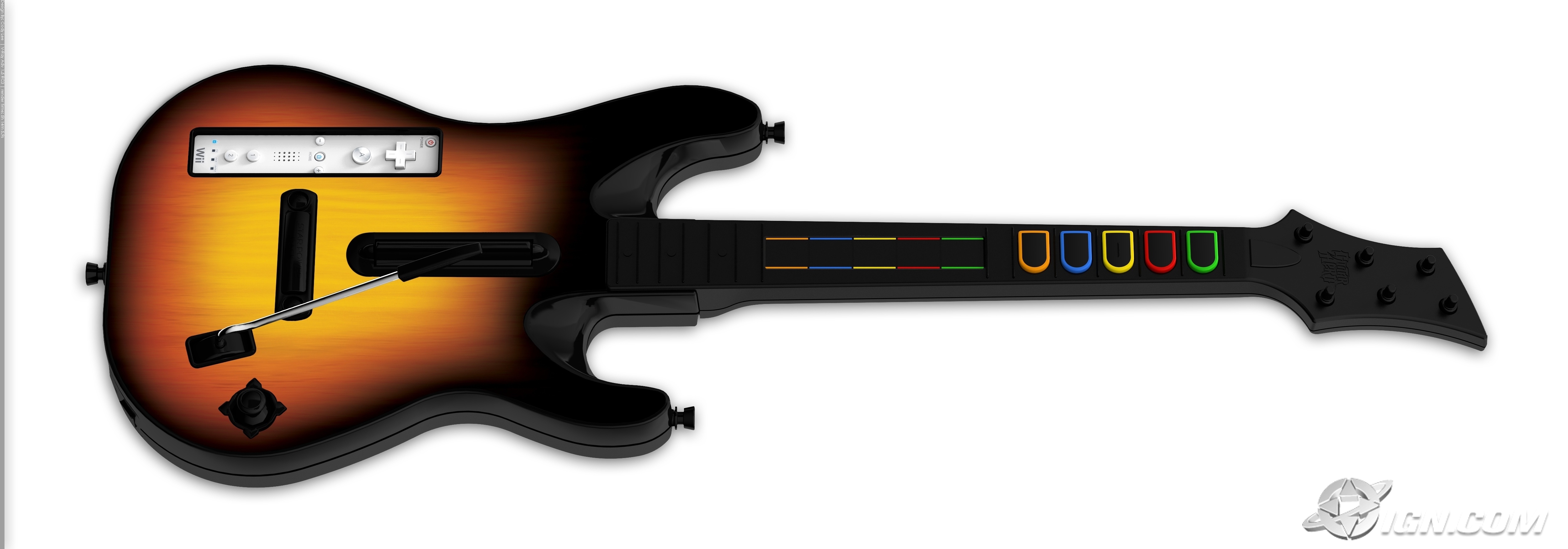
There are a bunch of guitar and drums devices out there that all report
similar data. To avoid reporting this as BTN_MISC or ABS_MISC, we
allocate some proper namespace for them. Note that most of these devices
are toys and we cannot report any sophisticated physics via this API.

I did some google-images research and tried to provide definitions that
work with all common devices. That's why I went with 4 toms, 4 cymbals,
one bass, one hi-hat. I haven't seen other drums and I doubt that we need
any additions to that. Anyway, the naming-scheme is intentionally done in
an extensible way.

For guitars, we support 5 frets (normally aligned vertically, compared to
the real horizontal layouts), a single strum-bar with up/down directions,
an optional fret-board and a whammy-bar.

Most of the devices provide pressure values so I went with ABS_* bits. If
we ever support devices which only provide digital input, we have to
decide whether to emulate pressure data or add additional BTN_* bits.

If someone is not familiar with these devices, here are two pictures which
provide almost all introduced interfaces (or try the given keywords
with a google-image search):
  Guitar: ("guitar hero world tour guitar")
    http://images1.wikia.nocookie.net/__cb20120911023442/applezone/es/images/f/f9/Wii_Guitar.jpg
  Drums: ("guitar hero drums")
    http://oyster.ignimgs.com/franchises/images/03/55/35526_band-hero-drum-set-hands-on-20090929040735768.jpg

Signed-off-by: David Herrmann <dh.herrmann@gmail.com>
Acked-by: Dmitry Torokhov <dmitry.torokhov@gmail.com>
Signed-off-by: Jiri Kosina <jkosina@suse.cz>
The ARM OABI and EABI disagree on the alignment of structures
with small members, so module init tools may interpret the
ssb device table incorrectly, as shown  by this warning when
building the b43 device driver in an OABI kernel:

FATAL: drivers/net/wireless/b43/b43: sizeof(struct ssb_device_id)=6 is
not a modulo of the size of section __mod_ssb_device_table=88.

Forcing the default (EABI) alignment on the structure makes this
problem go away. Since the ssb_device_id may have the same problem,
better fix both structures.

Signed-off-by: Arnd Bergmann <arnd@arndb.de>
Cc: Russell King <linux@arm.linux.org.uk>
Cc: John W. Linville <linville@tuxdriver.com>
Cc: Michael Buesch <mb@bu3sch.de>
Cc: Larry Finger <Larry.Finger@lwfinger.net>
Signed-off-by: John W. Linville <linville@tuxdriver.com>
dmi_match() considers a substring match to be a successful match.  This is
not always sufficient to distinguish between DMI data for different
systems.  Add support for exact string matching using strcmp() in addition
to the substring matching using strstr().

The specific use case in the i915 driver is to allow us to use an exact
match for D510MO, without also incorrectly matching D510MOV:

  {
	.ident = "Intel D510MO",
	.matches = {
		DMI_MATCH(DMI_BOARD_VENDOR, "Intel"),
		DMI_EXACT_MATCH(DMI_BOARD_NAME, "D510MO"),
	},
  }

Signed-off-by: Jani Nikula <jani.nikula@intel.com>
Cc: <annndddrr@gmail.com>
Cc: Chris Wilson <chris@chris-wilson.co.uk>
Cc: Cornel Panceac <cpanceac@gmail.com>
Acked-by: Daniel Vetter <daniel.vetter@ffwll.ch>
Cc: Greg KH <greg@kroah.com>
Signed-off-by: Andrew Morton <akpm@linux-foundation.org>
Signed-off-by: Linus Torvalds <torvalds@linux-foundation.org>
mei client bus will present some of the mei clients
as devices for other standard subsystems

Implement the probe, remove, match, device addtion routines, along with
the sysfs and uevent ones. mei_cl_device_id is also added to
mod_devicetable.h
A mei-cleint-bus.txt document describing the rationale and the API usage
is also added while ABI/testing/sysfs-bus-mei describeis the modalias ABI.

Signed-off-by: Samuel Ortiz <sameo@linux.intel.com>
Signed-off-by: Tomas Winkler <tomas.winkler@intel.com>
Signed-off-by: Greg Kroah-Hartman <gregkh@linuxfoundation.org>