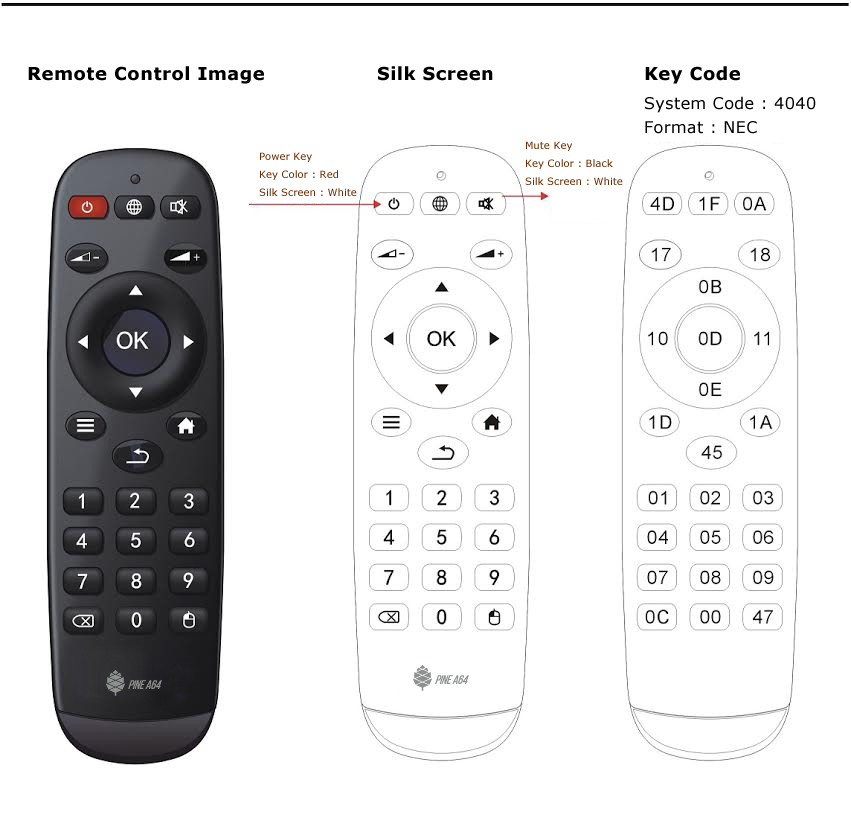
The rc-cec keymap is unusual in that it can't be built as a module,
instead it is registered directly in rc-main.c if CONFIG_MEDIA_CEC_RC
is set. This is because it can be called from drm_dp_cec_set_edid() via
cec_register_adapter() in an asynchronous context, and it is not
allowed to use request_module() to load rc-cec.ko in that case. Trying to
do so results in a 'WARN_ON_ONCE(wait && current_is_async())'.

Since this keymap is only used if CONFIG_MEDIA_CEC_RC is set, we
just compile this keymap into the rc-core module and never as a
separate module.

Signed-off-by: Hans Verkuil <hverkuil-cisco@xs4all.nl>
Fixes: 2c6d1fffa1 (drm: add support for DisplayPort CEC-Tunneling-over-AUX)
Reported-by: Hans de Goede <hdegoede@redhat.com>
Signed-off-by: Sean Young <sean@mess.org>
Signed-off-by: Mauro Carvalho Chehab <mchehab+huawei@kernel.org>
Pull follow_pfn() updates from Daniel Vetter:
 "Fixes around VM_FPNMAP and follow_pfn:

   - replace mm/frame_vector.c by get_user_pages in misc/habana and
     drm/exynos drivers, then move that into media as it's sole user

   - close race in generic_access_phys

   - s390 pci ioctl fix of this series landed in 5.11 already

   - properly revoke iomem mappings (/dev/mem, pci files)"

* tag 'topic/iomem-mmap-vs-gup-2021-02-22' of git://anongit.freedesktop.org/drm/drm:
  PCI: Revoke mappings like devmem
  PCI: Also set up legacy files only after sysfs init
  sysfs: Support zapping of binary attr mmaps
  resource: Move devmem revoke code to resource framework
  /dev/mem: Only set filp->f_mapping
  PCI: Obey iomem restrictions for procfs mmap
  mm: Close race in generic_access_phys
  media: videobuf2: Move frame_vector into media subsystem
  mm/frame-vector: Use FOLL_LONGTERM
  misc/habana: Use FOLL_LONGTERM for userptr
  misc/habana: Stop using frame_vector helpers
  drm/exynos: Use FOLL_LONGTERM for g2d cmdlists
  drm/exynos: Stop using frame_vector helpers
Fix kerneldoc documentation for functions that add async sub-devices to
notifiers. The functions themselves were improved recently but that left
issues with the kerneldoc documentation. Fix them now.

Also remove underscores from macro argument names.

[mchehab: fix a build breakage]
Reported-by: Stephen Rothwell <sfr@canb.auug.org.au>
Fixes: b01edcbd40 ("media: v4l2-async: Improve v4l2_async_notifier_add_*_subdev() API")
Signed-off-by: Sakari Ailus <sakari.ailus@linux.intel.com>
Signed-off-by: Mauro Carvalho Chehab <mchehab+huawei@kernel.org>
The V4L2 temporary clock helper API, was introduced
in late 2012 and, as mentioned in the documentation,
meant to be replaced by the generic clock API,
once the generic clock framework became available
on all relevant architectures.

The generic clock API is a well-established API (since a few
years now). The last few media capture drivers and sensors
using v4l2-clk have been converted to the generic clock framework.

We can now remove the v4l2-clk API.

Signed-off-by: Ezequiel Garcia <ezequiel@collabora.com>
Acked-by: Petr Cvek <petrcvekcz@gmail.com>
Signed-off-by: Sakari Ailus <sakari.ailus@linux.intel.com>
Signed-off-by: Mauro Carvalho Chehab <mchehab+huawei@kernel.org>
The functions that add an async subdev to an async subdev notifier take
as an argument the size of the container structure they need to
allocate. This is error prone, as passing an invalid size will not be
caught by the compiler. Wrap those functions in macros that take a
container type instead of a size, and cast the returned pointer to the
desired type. The compiler will catch mistakes if the incorrect type is
passed to the macro, as the assignment types won't match.

Signed-off-by: Laurent Pinchart <laurent.pinchart+renesas@ideasonboard.com>
Reviewed-by: Niklas Söderlund <niklas.soderlund+renesas@ragnatech.se>
Reviewed-by: Jacopo Mondi <jacopo+renesas@jmondi.org>
Signed-off-by: Ezequiel Garcia <ezequiel@collabora.com>
Signed-off-by: Sakari Ailus <sakari.ailus@linux.intel.com>
Reviewed-by: Helen Koike <helen.koike@collabora.com>
Reviewed-by: Tomi Valkeinen <tomi.valkeinen@ideasonboard.com> (core+ti-cal)
Signed-off-by: Mauro Carvalho Chehab <mchehab+huawei@kernel.org>
Most -if not all- use-cases are expected to be covered by one of:
v4l2_async_notifier_add_fwnode_subdev,
v4l2_async_notifier_add_fwnode_remote_subdev or
v4l2_async_notifier_add_i2c_subdev.

We'd like to discourage drivers from using v4l2_async_notifier_add_subdev,
so rename it as __v4l2_async_notifier_add_subdev. This is
typically a good hint for drivers to avoid using the function.

Signed-off-by: Ezequiel Garcia <ezequiel@collabora.com>
Reviewed-by: Laurent Pinchart <laurent.pinchart@ideasonboard.com>
Reviewed-by: Helen Koike <helen.koike@collabora.com>
Signed-off-by: Sakari Ailus <sakari.ailus@linux.intel.com>
Signed-off-by: Mauro Carvalho Chehab <mchehab+huawei@kernel.org>
There are no users for vpif_display_config.asd_sizes
and vpif_display_config.asd members, which means the v4l2-async
subdevices aren't being defined anywhere.

Remove the v4l2-async, leaving only the synchronous setup.

Signed-off-by: Ezequiel Garcia <ezequiel@collabora.com>
Reviewed-by: Helen Koike <helen.koike@collabora.com>
Signed-off-by: Sakari Ailus <sakari.ailus@linux.intel.com>
Signed-off-by: Mauro Carvalho Chehab <mchehab+huawei@kernel.org>
Change v4l2_async_notifier_add_fwnode_remote_subdev semantics
so it allocates the struct v4l2_async_subdev pointer.

This makes the API consistent: the v4l2-async subdevice addition
functions have now a unified usage model. This model is simpler,
as it makes v4l2-async responsible for the allocation and release
of the subdevice descriptor, and no longer something the driver
has to worry about.

On the user side, the change makes the API simpler for the drivers
to use and less error-prone.

Signed-off-by: Ezequiel Garcia <ezequiel@collabora.com>
Reviewed-by: Laurent Pinchart <laurent.pinchart@ideasonboard.com>
Signed-off-by: Sakari Ailus <sakari.ailus@linux.intel.com>
Reviewed-by: Helen Koike <helen.koike@collabora.com>
Signed-off-by: Mauro Carvalho Chehab <mchehab+huawei@kernel.org>
The last user for this type of match was the soc-camera/sh_mobile_csi2
driver, which was removed in v4.9. If the support is ever needed,
it can always be restored.

[Sakari Ailus: Also drop DEVNAME from debug prints recently added.]

Signed-off-by: Ezequiel Garcia <ezequiel@collabora.com>
Reviewed-by: Laurent Pinchart <laurent.pinchart@ideasonboard.com>
Signed-off-by: Sakari Ailus <sakari.ailus@linux.intel.com>
Signed-off-by: Mauro Carvalho Chehab <mchehab+huawei@kernel.org>
There is currently little to no information available about the reasons
why a v4l2-async device hasn't probed completely.

Inspired by the "devices_deferred" debugfs file, add a file to list
information about the subdevices that are on waiting lists, for each
notifier.

This is useful to debug v4l2-async subdevices and notifiers, for instance
when doing device bring-up.

For instance, a typical output would be:

$ cat /sys/kernel/debug/video4linux/pending_async_subdevices
ipu1_csi1:
 [fwnode] dev=20e0000.iomuxc-gpr:ipu1_csi1_mux, node=/soc/bus@2000000/iomuxc-gpr@20e0000/ipu1_csi1_mux
ipu1_csi0:
 [fwnode] dev=20e0000.iomuxc-gpr:ipu1_csi0_mux, node=/soc/bus@2000000/iomuxc-gpr@20e0000/ipu1_csi0_mux
imx6-mipi-csi2:
 [fwnode] dev=1-003c, node=/soc/bus@2100000/i2c@21a4000/camera@3c
imx-media:

Signed-off-by: Ezequiel Garcia <ezequiel@collabora.com>
Reviewed-by: Laurent Pinchart <laurent.pinchart@ideasonboard.com>
Tested-by: Kieran Bingham <kieran.bingham+renesas@ideasonboard.com>
Signed-off-by: Sakari Ailus <sakari.ailus@linux.intel.com>
Signed-off-by: Mauro Carvalho Chehab <mchehab+huawei@kernel.org>
Document that v4l2_async_notifier_parse_fwnode_endpoints() is deprecated.
Its functionality has been replaced by other, better functions. Also add a
reference to an example if someone ends up wandering here.

Signed-off-by: Sakari Ailus <sakari.ailus@linux.intel.com>
Signed-off-by: Mauro Carvalho Chehab <mchehab+huawei@kernel.org>
Rename v4l2_get_link_rate() as v4l2_get_link_freq(). What the function
returns is the frequency of the link; rename it to reflect the name of the
control where the information is obtained.

Fixes: 1b888b3ceb ("media: v4l: Add a helper for obtaining the link frequency")
Signed-off-by: Sakari Ailus <sakari.ailus@linux.intel.com>
Signed-off-by: Mauro Carvalho Chehab <mchehab+huawei@kernel.org>
When unregistering a V4L2 device node, make sure any filehandles
that are waiting for an event are woken up.

Add v4l2_event_wake_all() to v4l2-event.c and call it from
video_unregister_device().

Otherwise userspace might never know that a device node was removed.

[hverkuil: checkpatch: replaced 'if (vdev == NULL)' by 'if (!vdev)']

Signed-off-by: Hans Verkuil <hverkuil-cisco@xs4all.nl>
Signed-off-by: Mauro Carvalho Chehab <mchehab+huawei@kernel.org>
The FWHT stateless 'uAPI' was staging and marked explicitly in the
V4L2 specification that it will change and is unstable.
Note that these control IDs were never exported as a public API,
they were only defined in kernel-local headers (fwht-ctrls.h).

Now, the FWHT stateless controls is ready to be part
of the stable uAPI.

While not too late:

- Rename V4L2_CID_MPEG_VIDEO_FWHT_PARAMS to V4L2_CID_STATELESS_FWHT_PARAMS.

- Move the contents of fwht-ctrls.h to v4l2-controls.h.

- Move the public parts of drivers/media/test-drivers/vicodec/codec-fwht.h
  to v4l2-controls.h.

- Add V4L2_CTRL_TYPE_FWHT_PARAMS control initialization and validation.

- Add p_fwht_params to struct v4l2_ext_control.

Signed-off-by: Hans Verkuil <hverkuil-cisco@xs4all.nl>
Signed-off-by: Mauro Carvalho Chehab <mchehab+huawei@kernel.org>
The H.264 stateless 'uAPI' was staging and marked explicitly in the
V4L2 specification that it will change and is unstable.

Note that these control IDs were never exported as a public API,
they were only defined in kernel-local headers (h264-ctrls.h).

Now, the H264 stateless controls is ready to be part
of the stable uAPI.

While not too late, let's rename them and re-number their
control IDs, moving them to the newly created stateless
control class, and updating all the drivers accordingly.

Signed-off-by: Ezequiel Garcia <ezequiel@collabora.com>
Tested-by: Jernej Skrabec <jernej.skrabec@siol.net>
Signed-off-by: Hans Verkuil <hverkuil-cisco@xs4all.nl>
Signed-off-by: Mauro Carvalho Chehab <mchehab+huawei@kernel.org>
 Hans Verkuil
 Linus Torvalds
 Sakari Ailus
 Ezequiel Garcia
 Laurent Pinchart
 Mauro Carvalho Chehab
 Daniel Scally
 Daniel Vetter
 Hans Verkuil
 Sowjanya Komatineni
 Jonas Karlman